

The search query “What is the best security company?” is one of the most common and, paradoxically, one of the most misleading. It presumes that the answer is a fixed name on a global list. In the high-stakes, dynamic world of corporate and personal protection, particularly within complex operating theatres like Iraq, this is a dangerous assumption.
The “best” security company is not the one with the largest global footprint or the highest revenue. The best security company is the one that perfectly aligns its specialized expertise, proven capability, and absolute compliance with your unique threat profile. It is an act of sophisticated selection, not a simple ranking.
For organizations, executives, and high-net-worth individuals operating where the margin for error is zero, selecting a security partner requires a rigorous and professional due diligence process. This authoritative guide lays out the non-negotiable mandates and critical disciplines you must evaluate to identify the security partner that will guarantee your resilience and operational continuity.
10 Non-Negotiable Criteria for Selection
Choosing a security company requires more than looking at its reputation or size. The real test lies in its core capabilities and ability to operate effectively in your environment. The following key factors define what makes a firm truly exceptional.
1. Local Expertise and Operational Knowledge
Security is local by nature. A company that succeeds in a stable area may fail in a volatile one. The best firms understand their surroundings from political dynamics and crime patterns to cultural nuances and legal requirements.
Before choosing a provider, ask: Do they have proven experience in Iraq’s security landscape? Local ownership supported by international standards delivers the strongest results.
2. Specialized Threat Mitigation Capabilities
Different operations require different protections. A reliable partner must deliver integrated solutions across multiple areas of risk.
| Security Focus | What to Ask | Internal Link |
|---|---|---|
| Facility Security | Can the firm conduct professional, data-based assessments to detect vulnerabilities in compounds or offices? | Facility Security Assessments |
| Executive Protection | Are their personnel trained to protect executives and VIPs discreetly and effectively? | Executive Protection |
| Asset Mobility | Can they manage high-value transfers, including Cash in Transit operations with armored support? | Cash in Transit / Armored Vehicle |
| Rapid Response | Do they operate well-equipped Mobile Security Teams ready to act quickly in emergencies? | Mobile Security Teams |
3. Compliance and Licensing: The Core of Legitimacy
Legality defines credibility. In Iraq and beyond, unlicensed or non-compliant firms create severe legal and reputational risks for their clients.
The best security companies maintain full transparency and obtain every required government license for their staff, vehicles, and operations. At Black Tiger, our standard is B.T.C. ( Business, Transparency, and Compliance )ensuring that every mission is lawful, ethical, and professionally executed.
4. Vetting and Training Rigour
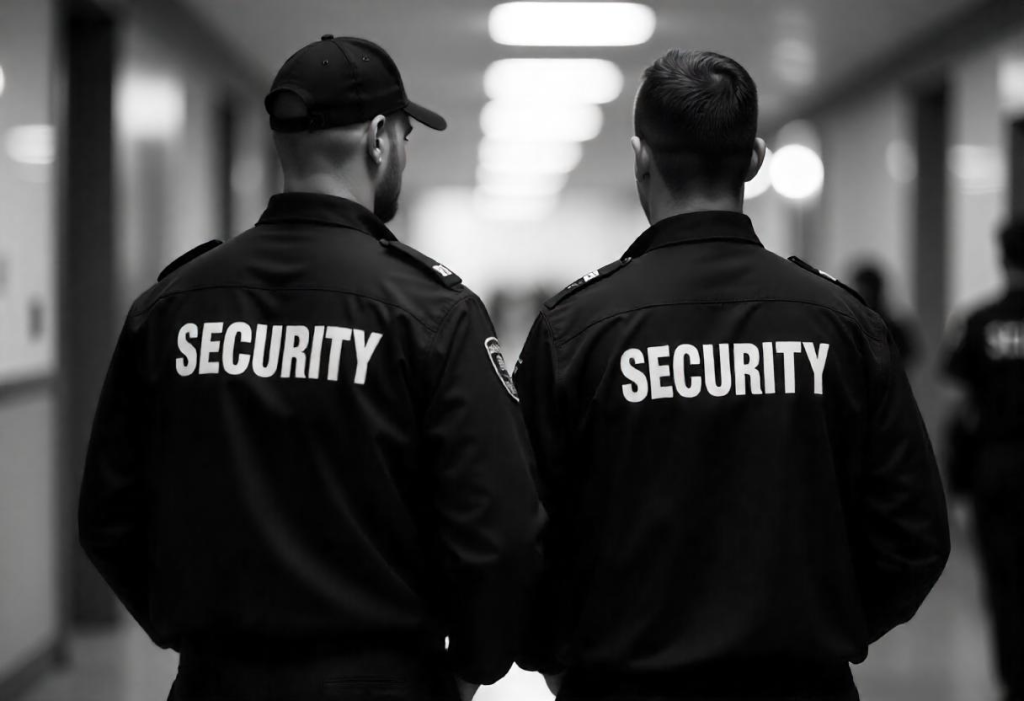
The quality of the personnel is the quality of the service. You must look beyond a security guard uniform.
The Requirement: Demand a rigorous process for personnel vetting, including comprehensive background checks, psychological evaluations, and continuous, advanced training. Training must cover tactical skills, first aid (Trauma Casualty Care), defensive driving, and professional etiquette. The firm’s training regimen must prepare teams for High-Threat Protection scenarios, not just basic gate duty.
5. Risk and Threat Intelligence Capabilities
Exceptional security is proactive, not reactive. It is built on current, actionable intelligence.
The Requirement: The company must demonstrate an operational capacity to gather, analyze, and disseminate timely threat intelligence relevant to your operational footprint. This intelligence must inform daily procedures, route planning, and long-term strategic decisions, ensuring your Asset Protection strategy is always ahead of the curve.
Deconstructing the Security Disciplines
Identifying the “best” requires a deep dive into how a company approaches different security vectors.
I. The Human Element: Personnel and Management
A company’s management structure reflects its operational integrity. Look for a flat, responsive command-and-control hierarchy.
- Question: What is the span of control? Is there a clear, single point of contact (SPOC) for crisis escalation?
- Best Practice: The security provider must embed management staff or a dedicated client liaison officer who is accessible 24/7 and empowered to make high-level decisions instantly.
II. The Physical Element: Static and Mobile Protection
Physical security must be layered and adaptable, whether protecting a stationary compound or a high-value convoy.
- Static Protection: The deployment of guards must be based on a formal threat assessment, utilizing both uniformed and plainclothes surveillance where appropriate. Technology—CCTV, access control, alarms—must be fully integrated and regularly audited.
- Mobile Protection: Mobile Security Teams should possess superior communication technology, advanced medical kits, and contingency planning for vehicle breakdown, ambush, or roadblock scenarios. The transition from static security to mobile security (and back) is a common failure point that the best firms plan for meticulously.
III. The Strategic Element: Crisis Preparedness
The true measure of a security company is its performance during an incident.
- Incident Response Planning: The firm must provide a detailed, tested Incident Response Plan (IRP) that outlines specific protocols for medical emergency, hostile surveillance, kidnapping, and technical failure. This plan must integrate flawlessly with your internal corporate security policy.
- Simulation and Testing: The “best” firms insist on conducting joint simulation exercises with the client’s personnel. This validates protocols and builds critical muscle memory before a crisis occurs.

Frequently Asked Questions (FAQ) on Security Selection
Q: What is the most critical question to ask a potential security provider? A: “Describe your last major incident in this country, how you responded, and what lessons were immediately implemented.” This tests their operational transparency, crisis management, and commitment to continuous improvement.
Q: Is international experience more important than local knowledge? A: No. In a high-risk setting, the combination is required. International experience ensures adherence to global best practices (SOPs, reporting, compliance), but local knowledge of culture, threats, and who to speak to in an emergency is what ensures operational success. The best companies merge international standards with local tactical mastery.
Q: How do we verify a security company’s compliance claims? A: Demand copies of all current operating licenses, specifically those covering weapons, personnel deployment, and Armored Vehicle utilization. Furthermore, request proof of valid, comprehensive liability insurance that covers operations within the specific country of deployment.
Q: What is the role of technology in “The Best” security service? A: Technology is an enabler, not a solution. The best security companies utilize state-of-the-art GPS tracking, secure encrypted communications, and remote monitoring systems. However, this technology must be backed by highly trained analysts and operational response teams to be effective.
Conclusion: Securing Your Future with Black Tiger
The answer to “What is the best security company?” is the company that can demonstrate, through a professional mandate, that they possess the integrity, capability, and intelligence required to protect your most valuable assets.
For entities operating in Iraq and across the MENA region, the security challenge is unique, demanding a partner with uncompromising local knowledge and a global standard of professionalism.
Black Tiger has built its reputation by excelling in the ten mandates outlined in this guide. We provide comprehensive, integrated High-Threat Protection and Asset Protection services from strategic risk consulting and Facility Security Assessments to the operational deployment of specialized Executive Protection teams and secure logistics. We ensure that our B.T.C. Services—Business, Transparency, and Compliance are the bedrock of every client engagement.
Do not settle for a brand; insist on a mandate.
For a confidential discussion on your security requirements, contact the Black Tiger headquarters today:
Black Tiger Headquarters Baghdad – Al Mansour – AL Dawoody Street
Telephone:
- 00964 780 8999 882
- 00964 770 2222 853
Email:
Website: https://blacktiger-iq.com/